
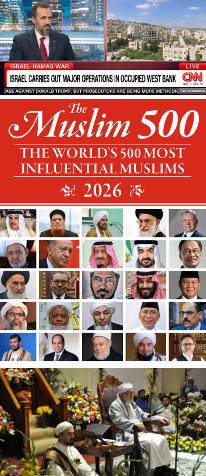
وتُصدر هذه القائمة سنويًّا المركزُ الملكي للدراسات الاستراتيجية الإسلامية في الأردن، التابع لمؤسسة آل البيت الملكية للفكر الإسلامي، بقيادة صاحب السمو الملكي الأمير غازي بن محمد، كبير مستشاري جلالة الملك عبد الله الثاني للشؤون الدينية والثقافية.
نبذة موجزة
وُلد الأستاذ الدكتور هشام الزبير هلّير في أبوظبي، لأبٍ إنجليزي أسلم في الجامع الأزهر عام 1974، ولأمٍّ مصرية ذات أصولٍ سودانية ومغربية، ونشأ بين أبوظبي ولندن والقاهرة.
وهو باحثٌ وأكاديميٌّ بريطانيٌّ بارز، متخصص في الشؤون الدولية والقانون والفكر الإسلامي. يشغل منصب زميل مشارك أول في الأمن الدولي بالمعهد الملكي للخدمات المتحدة لدراسات الدفاع والأمن (RUSI)، المؤسَّس عام 1831، منذ عام 2013، وهو أطول الزملاء المشاركين خدمةً في المعهد. ويشغل كذلك منصب الأستاذ الباحث المشارك (Professorial Research Associate) في معهد الشرق الأوسط بكلية الدراسات الشرقية والأفريقية (SOAS) بجامعة لندن. وقد تقلّد زمالاتٍ ومناصبَ أستاذية في جامعات كامبريدج ووارويك وهارفارد، وله عشرة كتب صادرة عن دور نشر أكاديمية مرموقة.
وإلى جانب مسيرته الأكاديمية والمهنية، نال الشيخ الدكتور هشام الإجازة في العلوم الإسلامية عن شيخه الشيخ سراج هندريكس رحمه الله، خليفة العلامة السيد محمد بن علوي المالكي الحسني، عالم الحجاز ومن أعلام الطريقة الشاذلية وحَمَلة «طريقة علماء مكة». وله كذلك أسانيدُ وإجازاتٌ في الطريقة الشاذلية من تونس، مهد الزاوية الأولى لسيدي أبي الحسن الشاذلي، وفي الطريقة العلوية الحضرمية من اليمن وماليزيا.
[صورة: الشيخ هشام مع الشيخ سراج هندريكس]
المكانة الأكاديمية والعلمية
حصل الدكتور هشام على بكالوريوس الحقوق (LLB) وماجستير الاقتصاد السياسي الدولي، كليهما من جامعة شيفيلد بالمملكة المتحدة، ثم على الدكتوراه من جامعة وارويك في برنامج متعدد التخصصات في العلوم الاجتماعية.
ويشغل الشيخ الدكتور هشام منصب أستاذ زائر في مركز الدراسات المتقدمة في الإسلام والعلوم والحضارة (CASIS) بالجامعة التقنية الماليزية، وأستاذ الفكر الإسلامي في كلية البيان للدراسات العليا، بالشراكة مع معهد شيكاغو اللاهوتي، أقدم مؤسسة للتعليم العالي في مدينة شيكاغو.
وكان أوّل أستاذٍ زميل (Professorial Fellow) في كلية كامبريدج الإسلامية، وهو أستاذ باحث مشارك في معهد الشرق الأوسط بكلية الدراسات الشرقية والأفريقية (SOAS)، وعضوًا في هيئة إدارة المجلس البريطاني للعلماء والأئمة، وعضوًا في اللجنة الأكاديمية بمؤسسة طابة بتعيين من الحبيب علي الجفري حفظه الله، وزميلًا في مركز الدراسات الإسلامية بجامعة كامبريدج.
وقد قدّم المشورة لحكومات وهيئات دولية على المستوى الوزاري، ويظهر بانتظام محلّلًا في وسائل الإعلام الدولية. وله عشرة مؤلفات في السياسة والعلاقات الدولية والدراسات الإسلامية، صادرة عن دور نشر مرموقة منها مطبعة جامعة أكسفورد (Oxford University Press)، وبلومزبري (Bloomsbury)، ومطبعة معهد بروكينغز (Brookings Institution Press).
الأعمال الحكومية والاستشارية
قدّم الدكتور هشام المشورة للحكومة البريطانية في سياسات التماسك الوطني في أعقاب تفجيرات لندن في يوليو 2005، وكان نائب منسّق أحد أفرقة العمل الحكومية المنشأة لهذا الغرض، وعمل مُعارًا لدى وزارة الخارجية البريطانية. وقدّم المشورة لمسؤولين على المستوى الوزاري في الولايات المتحدة وأوروبا والشرق الأوسط وشمال أفريقيا وجنوب شرق آسيا، في الشؤون الدولية والنظام العالمي والقانون الدولي ومكافحة الإرهاب، وتقلّد سابقًا مناصب بحثية أولى في معهد بروكينغز ومؤسسة كارنيغي للسلام الدولي والمجلس الأطلسي.
كما أدلى بشهادات وإفادات أمام لجان في البرلمان البريطاني، ويظهر محلّلًا في وسائل إعلام دولية، منها شبكة CNN، وهيئة الإذاعة البريطانية BBC، وقناة الجزيرة، وقناة DW الألمانية.
النسب والنشأة
والدة الشيخ الدكتور هشام مصرية، تنحدر من نسبٍ عبّاسي سوداني من أسرة الزبير باشا، ويتصل نسبها بالبيت السنوسي الحسني الذي أصله من مدينة فاس بالمغرب.
وقد قضى فترات مهمة من نشأته بين أبوظبي والقاهرة ولندن، متنقلًا بين الغرب والعالم العربي، وهذه النشأة المزدوجة لا تزال تشكّل مسيرته الفكرية والمهنية.
وبدأ اهتمامه الجادّ بالتراث الفكري الإسلامي في سنّ المراهقة، فرحل إلى العلماء ذوي التكوين التقليدي الأصيل وأخذ عنهم في أوروبا، والعالم العربي، وجنوب شرق آسيا، وجنوب أفريقيا، ومصر، ثم غرب أفريقيا، إلى جانب تكوينه في العلوم الإنسانية والاجتماعية الغربية.
الإجازة والسند والتكوين الصوفي
دخل الدكتور هشام الطريقةَ أولًا عن طريق البيعة مع الشيخ عبدالله نور الدين، أحد خلفاء الشيخ الشاذلي الكبير الشيخ إبراهيم البطّاوي، ثم بايع الشيخ إبراهيم نفسه في مصر، وهو خليفة وخلَف سيدي الشيخ سلامة الراضي.
وبذلك اتصل الشيخ الدكتور هشام بالسند الشاذلي الذي حمله الشيخ إبراهيم عن الشيخ سلامة الراضي، والذي ضمّ ثلاثة مشارب رئيسة:
١. المكية الفاسية، المتصلة بالطريقة الفاسية الدرقاوية في المغرب وسلسلة الشيخ محمد بن حمزة ظافر المدني، تلميذ الشيخ العربي الدرقاوي؛
٢. والقاوقجية المصرية، نسبةً إلى العالم اللبناني والشيخ الشاذلي الشيخ محمد بن خليل أبي المحاسن القاوقجي الطرابلسي؛
٣. ومشرب الشيخ علي مرزوق المالكي.
وهذه المشارب الثلاثة جميعها تحفظ الميراث الشاذلي الأصيل، من طريق السند المكتوب عن الشيخ ابن عطاء الله، والسند الشفهي عن الشيخ ياقوت العرش، وكلاهما ينتهي إلى الشيخ أبي العباس المرسي. وقد اتّسع سند الدكتور هشام أكثر عبر الشيخ عبدالله نور الدين نفسه، الذي تتصل أسانيده أيضًا بسيدي الشيخ أحمد العلاوي الجزائري، وسيدي الشيخ علي نور الدين اليشرطي الفلسطيني، وسيدي الشيخ محمد بن الحبيب المغربي.
ثم توسّع هذا التكوين البطّاوي الأول وتأكّد بأسانيد حيّة لاحقة. فقد نال الشيخ الدكتور هشام إجازته في تلقين الأوراد والأذكار الشاذلية من ثلاثة مصادر ضمن هذه السلسلة:
أ) الشيخ صلاح محمد صالح، خليفة الشيخ إبراهيم البطّاوي؛
ب) الخليفة اللبناني للشيخ عبد الرحمن الشاغوري السوري، مما أضاف إلى سنده المشرب الهاشمي الدرقاوي الشامي، المتصل بالشيخ أحمد العلاوي والشيخ علي الدرقاوي؛
ج) الشيخ حسن بلحسن، شيخ الشاذلية في تونس، حيث كانت أولى زوايا سيدي أبي الحسن الشاذلي، فاتّصل سندُه بالمنبع الأول للطريقة في موطن تأسيسها الأول.
غير أن إجازته الأتمّ في الطريقة الشاذلية كانت على يد الشيخ سراج هندريكس. ففي كانون الثاني (يناير) 2009، قاده طريقه الروحي إلى الشيخ سراج، خليفة السيد محمد بن علوي المالكي الحسني، عالم الشاذلية المكي الكبير. ولم يكن السيد محمد من أعلام الطريقة الشاذلية وحسب، بل كان أيضًا حاملًا لما يُعرف بـ«طريقة علماء مكة» الأوسع، التي جمعت بين الأحمدية الإدريسية، وطريقة بني علوي، والقادرية، والرفاعية، والخلوتية، والنقشبندية، وغيرها من الطرق.
فأجاز الشيخ سراج الدكتور هشام في العلوم الإسلامية، وخوّله – عبر سنده المتصل بالسيد محمد بن علوي المالكي – منصب المقدَّم. وقد أعطاه هذا التخويل صراحةً حقَّ إدخال المريدين في الطريقة وتعيينهم فيها، مع حق الإرشاد والتربية، وإجازة الأوراد والأحزاب والأذكار النبوية التي كان السيد محمد بن علوي المالكي مأذونًا بنقلها من مختلف الطرق ضمن هذا الميراث الأوسع، في إطار طريقة علماء مكة.
وقد أُعلن هذا التخويل علنًا في التاسع عشر من رمضان 1437هـ (يونيو 2016م) في الزاوية بكيب تاون، حيث نُصِّب الشيخ الدكتور هشام رسميًا مقدَّمًا للشيخ سراج، وهو الشخص الوحيد الذي نصّبه الشيخ سراج علنًا بهذه الصفة، قبل تلك المناسبة أو بعدها. كما عُيِّن عالمًا كبيرًا في معهد الزاوية بجنوب أفريقيا. وقد توفي الشيخ سراج رحمه الله سنة 2020.
ونال الدكتور هشام كذلك الإجازة من الشيخ أحمد هندريكس، الخليفة الآخر للسيد محمد بن علوي المالكي، ويحمل إجازةً أيضًا من السيد أحمد بن محمد بن علوي المالكي الحسني في مكة المكرمة، نجل السيد محمد ووارث علمه.
وإلى جانب هذا التكوين الذي كان شاذليًا بامتياز، لكنه تشرّب أيضًا طرقًا أخرى عبر طريقة علماء مكة، وأبرزها الطريقة العلوية والطريقة الإدريسية، نال الشيخ الدكتور هشام إجازات من علماء في جنوب شرق آسيا، منهم الشيخ هاشبي حسن، شيخ الطريقة الأحمدية الإدريسية، ورئيس رابطة علماء ومدرّسي الدين الإسلامي في سنغافورة (PERGAS) سابقًا، وعضو سابق رفيع في لجنة الفتوى بسنغافورة؛ والشيخ تُوان غورو حافظ جنديرامي في ماليزيا، وهو أشدّ ما يكون تعلّقًا بالطريقة العلوية. كما نال إجازات من عَلَمين علويَّين في اليمن، هما الحبيب كاظم السقاف والحبيب علي الجفري.
وآخر مشايخه، وهو الباقي منهم، شيخٌ قادريٌّ كبير، عرفه الدكتور هشام منذ عشرين سنة، وقد أذن له في الطريقة. ونال الدكتور هشام كذلك إجازة في أوراد الطريقة القادرية وسلسلتها من الشيخ عفيف الدين الجيلاني، متولي الحضرة القادرية في بغداد، فضلًا عن إجازة في الطريقة من أقدم سلسلة قادرية في مصر، وهي السلسلة القادرية الفردية، في ربيع الثاني 1448هـ.
وقد لازم الشيخ الدكتور هشام طوال هذه المدة صحبة العلماء، ولا سيما المنتسبين منهم إلى الطرق الشاذلية والعلوية والقادرية. وقد خوّله شيخه القادري بأخذ البيعة، وأكّد له الإذن الذي كان قد مُنحه سابقًا من الشيخ سراج، ثم نصّ له في نهاية المطاف بأنه «قادري شاذلي». ويوضح الدكتور هشام هذه النسبة بقوله: «أنا قادريٌّ شاذليٌّ؛ أي قادريٌّ على مسلك سيدي أبي الحسن الشاذلي، متشرِّبًا من طريقة علماء مكة».
وبأمرٍ من مشايخه، يُدرّس الدكتور هشام من علوم التراث الإسلامي، ولا سيّما التصوّف والفقه الشافعي.
Professor Dr Hisham Al-Zoubeir Hellyer Named Among the 500 Most Influential Muslims in the World for the Sixth Consecutive Year
The list is published annually by the Royal Islamic Strategic Studies Centre in Jordan, part of the Royal Aal al-Bayt Institute for Islamic Thought, under the leadership of HRH Prince Ghazi bin Muhammad, Chief Advisor to His Majesty King Abdullah II for Religious and Cultural Affairs.
Brief Profile
Professor Dr Hisham Al-Zoubeir Hellyer was born in Abu Dhabi to an English father who embraced Islam at al-Azhar Mosque in 1974, and an Egyptian mother of Sudanese and Moroccan origins. He grew up between Abu Dhabi, London and Cairo.
He is a leading British scholar and academic specialising in international affairs, law and Islamic thought. Since 2013 he has been Senior Associate Fellow in International Security at the Royal United Services Institute (RUSI), founded in 1831, where he is the longest-serving Associate Fellow. He is also Professorial Research Associate at the Middle East Institute of the School of Oriental and African Studies (SOAS), University of London. He has held fellowships and professorial posts at Cambridge, Warwick and Harvard, and is the author of ten books with leading academic publishers.
Alongside his academic and professional career, Shaykh Dr Hisham received ijaza in the Islamic sciences from his shaykh, the late Shaykh Seraj Hendricks (may God have mercy on him), khalifa of the great scholar Sayyid Muhammad ibn Alawi al-Maliki al-Hasani, the Hijazi scholar, luminary of the Shadhuli path, and bearer of the “Tariqa of the Ulama of Makka”. He also holds chains and ijazat in the Shadhuli Tariqa from Tunis, home of Sidi Abu al-Hasan al-Shadhuli’s first zawiya, and in the Ba ‘Alawi Tariqa from Yemen and Malaysia.
Academic and Scholarly Standing
Dr Hisham holds an LLB and an MA in International Political Economy, both from the University of Sheffield, and a PhD from the University of Warwick in an interdisciplinary social sciences programme.
Shaykh Dr Hisham is Visiting Professor at the Centre for Advanced Studies on Islam, Science and Civilisation (CASIS) at Universiti Teknologi Malaysia, and Professor of Islamic Thought at Al-Bayan Graduate School, in partnership with the Chicago Theological Seminary, the oldest institution of higher education in Chicago.
He was the first Professorial Fellow at the Cambridge Muslim College, is Professorial Research Associate at the Middle East Institute of SOAS, University of London, served on the board of the British Council of Muslim Scholars and Imams, sat on the academic committee of the Tabah Foundation by appointment of al-Habib Ali al-Jifri (may God preserve him), and was a Fellow at the Centre of Islamic Studies at the University of Cambridge.
He has advised governments and international bodies at ministerial level and appears regularly as an analyst in international media. He has authored ten works on politics, international relations and Islamic studies, published by leading houses including Oxford University Press, Bloomsbury and Brookings Institution Press.
Government and Advisory Work
Dr Hisham advised the British government on national cohesion policy after the July 2005 London bombings, served as deputy coordinator of one of the government working groups established for that purpose, and was seconded to the UK Foreign Office. He has advised ministerial-level officials in the United States, Europe, the Middle East and North Africa, and Southeast Asia on international affairs, world order, international law and counter-terrorism, and previously held senior research positions at the Brookings Institution, the Carnegie Endowment for International Peace and the Atlantic Council.
He has given testimony and evidence before committees of the British Parliament, and appears as an analyst on international media including CNN, the BBC, Al Jazeera and DW.
Lineage and Upbringing
Shaykh Dr Hisham’s mother is Egyptian, descending from a Sudanese Abbasid lineage of the family of al-Zubayr Pasha, and connected to the Sanusi-Hasani house originating in Fez, Morocco.
He spent formative years between Abu Dhabi, Cairo and London, moving between the West and the Arab world, and this dual upbringing continues to shape his intellectual and professional path.
His serious engagement with the Islamic intellectual tradition began in his teenage years. He travelled to scholars of authentic traditional formation and studied under them in Europe, the Arab world, Southeast Asia, South Africa, Egypt and then West Africa, alongside his training in the Western humanities and social sciences.
The Ijaza, Spiritual Chain (Sanad), and Sufi Formation
Dr Hisham first entered the Tariqa through the pledge of allegiance (bay’a) with Shaykh Abdullah Nur al-Din, one of the successors of the great Shadhuli shaykh, Shaykh Ibrahim al-Battawi. He then took the pledge with Shaykh Ibrahim himself in Egypt, a successor and heir of Sidi Shaykh Salama al-Radi.
Through this, Shaykh Dr Hisham connected to the Shadhuli chain that Shaykh Ibrahim carried from Shaykh Salama al-Radi, which combined three main streams:
- the Makkiyya Fasiyya, linked to the Fasi-Darqawi Tariqa in Morocco and the chain of Shaykh Muhammad ibn Hamza Zafir al-Madani, a student of Shaykh al-‘Arabi al-Darqawi;
- the Qawuqjiyya Egyptian stream, named after the Lebanese scholar and Shadhuli shaykh, Shaykh Muhammad bin Khalil Abu al-Mahasin al-Qawuqji al-Tarabulsi;
- and the stream of Shaykh Ali Marzouq al-Maliki.
All three streams preserve the authentic Shadhuli inheritance, through the written chain from Shaykh Ibn ‘Ata’illah and the oral chain from Shaykh Yaqut al-‘Arsh, both of which trace back to Shaykh Abu al-‘Abbas al-Mursi. Dr Hisham’s chain was further broadened through Shaykh Abdullah Nur al-Din himself, who was connected to other chains that link to Sidi Shaykh Ahmad al-‘Alawi of Algeria, Sidi Shaykh Ali Nur al-Din al-Yashruti of Palestine, and Sidi Shaykh Muhammad ibn al-Habib of Morocco.
This initial Battawi formation later expanded and was reinforced through living chains. Shaykh Dr Hisham received his ijaza to transmit the Shadhuli awrad and adhkar from three sources within this lineage:
a) Shaykh Salah Muhammad Salih, successor of Shaykh Ibrahim al-Battawi;
b) the Lebanese khalifa of the Syrian Shaykh Abd al-Rahman al-Shaghouri, which added the Syrian Hashimi-Darqawi stream to his chain, reverting through Shaykh Ahmad al-‘Alawi and Shaykh Ali al-Darqawi; and
c) Shaykh Hassan belHassan, the Shaykh of the Shadhuliyya in Tunis, where Sidi Abu al-Hasan al-Shadhuli had his first zawiya, connecting his chain to the earliest home of the Tariqa.
However, his most complete ijaza in the Shadhuli Tariqa came at the hands of Shaykh Seraj Hendricks. In January 2009, his spiritual path led him to Shaykh Seraj, successor of Sayyid Muhammad ibn Alawi al-Maliki al-Hasani, the great Makkan scholar of the Shadhuli path. Sayyid Muhammad was not only a leading figure of the Shadhuli Tariqa, but also a bearer of the broader “Tariqa of the Ulama of Makka”, which retained the Idrisi-Ahmadi path, the Ba ‘Alawi Tariqa, the Qadiriyya, the Rifa’iyya, the Khalwatiyya, the Naqshbandiyya, and others.
Shaykh Seraj granted Dr Hisham an ijaza in the Islamic sciences and authorized him, through his chain connected to Sayyid Muhammad ibn Alawi al-Maliki, with the position of muqaddam. This authorization explicitly gave him the right to induct and appoint murids into the Tariqa, along with the right of guidance and spiritual training, and the ijaza to transmit the awrad, ahzab and prophetic adhkar that Sayyid Muhammad ibn Alawi al-Maliki had been authorized to transmit from the various paths within this broader inheritance, as part of the Tariqa of the Ulama of Makka.
This authorization was publicly announced on the 19th of Ramadan 1437 AH (June 2016) at the zawiya in Cape Town, where Shaykh Dr Hisham was formally installed as muqaddam for Shaykh Seraj, the only person Shaykh Seraj publicly installed in this capacity, before or after that occasion. He was also appointed a senior scholar at the Zawiya Institute in South Africa. Shaykh Seraj passed away, may God have mercy on him, in 2020.
Dr Hisham also received ijaza from Shaykh Ahmad Hendricks, the other khalifa of Sayyid Muhammad ibn Alawi al-Maliki, and additionally holds an ijaza from Sayyid Ahmad bin Muhammad bin Alawi al-Maliki al-Hasani of Makka, son and scholarly heir of Sayyid Muhammad.
Alongside this formation, which was distinctly Shadhuli in character but also retained other paths through the Tariqa of the Ulama of Makka, most notably the Ba ‘Alawi and Idrisi Tariqas, Shaykh Dr Hisham also received ijazat from scholars in Southeast Asia. Among them are Shaykh Hasbi Hasan, shaykh of the Idrisi-Ahmadi Tariqa, former president of the Singapore Ulama and Religious Teachers Association (PERGAS), and a former senior member of Singapore’s Fatwa Committee; and Tuan Guru Shaykh Hafiz Jenderami in Malaysia, who is most keenly attached to the Ba ‘Alawi Tariqa. He also received ijazat from two Ba ‘Alawi scholars of Yemen, al-Habib Kadhim al-Saqqaf and al-Habib Ali al-Jifri.
His last and remaining shaykh is a senior Qadiri shaykh, whom he has known for twenty years and who granted him idhn in the Tariqa. Dr Hisham also received an ijaza in the awrad of the Qadiriyya Tariqa and its chain from Shaykh Afif al-Din al-Jilani, custodian of the Qadiri Hadra in Baghdad, in addition to an ijaza in the Tariqa from the oldest Qadiri chain in Egypt, the Qadiriyya al-Fardiyya chain, in Rabi’ al-Thani 1448 AH.
Throughout this period, Shaykh Dr Hisham kept close company with scholars, particularly those affiliated with the Shadhuli, Ba ‘Alawi and Qadiri paths. His Qadiri shaykh authorized him to take the pledge of allegiance (bay’a), reaffirmed the authority previously granted to him by Shaykh Seraj, and ultimately designated him as “Qadiri Shadhuli.” Dr Hisham explains this designation, saying: “I am Qadiri-Shadhuli, meaning I am Qadiri upon the manner of Sayyidi Abu al-Hasan al-Shadhuli, imbibing from the Tariqa of the Ulama of Makka.”
By the instruction of his shaykhs, Dr Hisham teaches from the Islamic heritage sciences, particularly Sufism (Tasawwuf) and Shafi’i jurisprudence (Fiqh).