
The Noble Lineage, a Comprehensive Biography, and some of his Writings
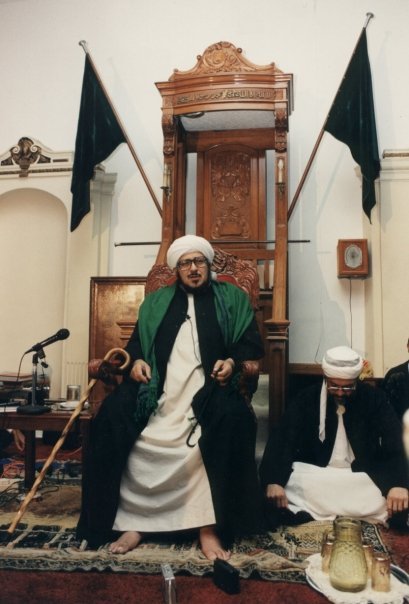
On the 15th of Ramadan 1425 (29 October 2004), just before dawn, the shaykh of our shaykhs, the ustadh of the asatidha, the Muhaddith of the Haramayn al-Sharifayn, the Usuli of the time, the master of Tariqa ‘Ulama Makka, the murabbi, the trainer of souls, al-Shaykh al-Sayyid Muhammad b. ‘Alawi b. Abbas b. ‘Abd al-‘Aziz al-Maliki al-Makki, left this world (1944–2004). He was in a fasting state, and he passed away on a Friday, may Allah have mercy upon his soul, and benefit us from him. His funeral (a video of which follows this piece) was one of the largest in modern times – Islamica Magazine published a short piece on him here.
What follows below is an attempt to offer a comprehensive portrait of this remarkable man: his lineage, his formation, his teachers, his trials, his works, his spiritual path, and the legacy he left behind for all who seek to walk the Prophetic way.
Contents
I. The Noble Lineage
II. The Maliki Family of Mecca
III. Birth and Early Life
IV. Scholarly Journeys: India, Libya, and Egypt
V. The Vast Network of Ijazat and Chains of Transmission
VI. Teaching Career and the Chair of the Haram
VII. The Trial, and the Years of Patience
VIII. The Spiritual Path
IX. Major Works and Intellectual Legacy
X. Southeast Asia: Schools, Students, and Influence
XI. Students and Successors
XII. His Character
XIII. His Family
XIV. Death and Legacy
Talks by Sayyid Muhammad b. ʿAlawī al-Mālikī
I. The Noble Lineage
The Prophetic Genealogy
Sayyid Muhammad, rahmatullah ‘alayhi, was a Hasani descendant of the Prophet, ‘alayhi salat wa salam. His full name is as Sayyid Muhammad ibn ‘Alawi ibn ‘Abbas ibn ‘Abd al-‘Aziz al-Maliki al-Hasani al-Idrisi al-Makki. His genealogical chain ascends through the Idrisi dynasty of Morocco to Idris al-Azhar ibn Idris al-Akbar ibn ‘Abdullah al-Kamil ibn al-Hasan al-Muthanna ibn al-Hasan al-Sibt — the Prophet’s grandson — ibn ‘Ali ibn Abi Talib and Fatima al-Zahra’, the daughter of the Messenger of God, ‘alayhi salat wa salam.
His maternal lineage also traces back to the Prophet, ‘alayhi salat wa salam, through Imam al-Husayn, radiyallahu ‘anhu. His mother was Sharifa Fatima ‘Abd al-Wahhab al-Baghdadi, and her genealogy connects with the line of Sayyidina ‘Abd al-Qadir al-Jilani, rahmatullah ‘alayh. Thus, through both his parents, the Sayyid was a descendant of the Beloved of God.
At some point centuries ago, the family’s common ancestor migrated from Morocco to Mecca, where they settled and established deep roots in the religious and intellectual life of the holy city. According to Besnik Sinani’s recent work Sufism in Saudi Arabia Since 1979: The Politics of Orthodoxy in Contemporary Islam (Brill, 2026), the family acquired the nisba “al-Maliki” during the early twentieth century under Sharif al-‘Awni, when the Sayyid’s great-grandfather, ‘Abd al-‘Aziz (d. 1324/1906), gained renown as a Maliki jurist — a reflection of the family’s established scholarly authority within the Maliki legal tradition in Mecca.
Hasani — and the Story of the Name “‘Alawi”
Many people think that because of his mastery of the tariqa of the Sada Ba ‘Alawi, and because of the name of his father (‘Alawi’), Sayyid Muhammad was actually from the Husayni sada of Yemen — of course, he was not. The Maliki family are Hasani, via Mawlay Idris of Morocco — and as such, the name ‘Alawi’ is a rather unusual one for him to have. It would have been far more typical for the Sada Ba ‘Alawi. How did he get that name?
So, the story is that the grandfather of Sayyid Muhammad b. Alawi al-Maliki, who was Sayyid ‘Abbas al-Maliki, the great Maliki jurist of Makka, really wanted one of his offspring to succeed him in his position as the shaykh of the Malikis. A member of the sada of the Bani ‘Alawi, Habib Ahmad ibn Hasan al-‘Attas, was visiting Makka, and Sayyid ‘Abbas went to visit him, asking him for his prayers. Habib Ahmad said that Allah would grant his prayers, delivering him a son, whom would, indeed, become a great scholar in Makka — but that as this was through the baraka of the sada Ba ‘Alawi, Sayyid ‘Abbas ought to name the son when he was born, “‘Alawi”. Not long thereafter, a boy was born; he was indeed named ‘Alawi; and he became one of the most noted scholars in the entirety of the umma, particularly in the Hijaz.
II. The Maliki Family of Mecca
The al-Maliki family is one of the oldest and most venerable scholarly dynasties of Mecca. For centuries, its members served as imams, teachers, preachers, and judges in the Sacred Mosque. At least three of the Sayyid’s direct ancestors held the position of Maliki Imam of the Haram — a distinction of extraordinary prestige.
The Great-Grandfather: ‘Abd al-‘Aziz al-Maliki (d. 1324/1906)
A renowned scholar and Qur’an teacher who established the family’s reputation for Maliki scholarship in Mecca.
The Grandfather: Sayyid ‘Abbas al-Maliki (d. 1353/1934)
The Sayyid’s grandfather served as Mufti and Qadi of Mecca and as Imam and Khatib of the Sacred Mosque. He held this post through three successive political eras — the Ottoman, the Hashemite, and the early Saudi periods — a testament to the family’s standing above political vicissitudes. King ‘Abd al-‘Aziz ibn Sa’ud himself held ‘Abbas al-Maliki in great respect. He was a representative of pre-Saudi Hijazi scholarly authority — embedded not at the margins, but at the very heart of the religious structure of Mecca.
The Father: Sayyid ‘Alawi ibn ‘Abbas al-Maliki (c. 1910–1971)
The Sayyid’s father, al-Sayyid ‘Alawi ibn ‘Abbas al-Maliki (1328–1391 AH), was a famed scholar of the Hijaz, who taught for some thirty years in and around the Ka’aba, and was the most illustrious scholar of Mecca in his generation.
Born in Mecca in 1328 AH, Sayyid ‘Alawi was raised under the care of his father. He first enrolled at the kuttab (Qur’an school) of his uncle, Hasan al-Maliki, memorised the Qur’an by the age of ten, and led the Tarawih prayers as imam in the Sacred Mosque. He had been both a student and later a teacher at al-Falah School, and maintained connections with Indian and transnational scholarly networks. He went on to master the full range of Islamic sciences under the leading scholars of Mecca and beyond.
Sayyid ‘Alawi taught in the Sacred Mosque for approximately forty years — an astonishing tenure that made him a living institution. His teaching circle at the hawsa and riwaq of the Gate of Peace (Bab al-Salam) in the Haram, as well as at the family residences in the Naqa and ‘Utaybiyya quarters, drew hundreds of students from across the Muslim world. Many of these students went on to hold key religious positions in their home countries.
His relationship with the Saudi royal family was one of deep mutual respect. King Faisal would not make any decision regarding Mecca without consulting Sayyid ‘Alawi. He also delivered an annual lecture at the Muslim World League’s (Rabitat al-‘Alam al-Islami) lecture series during the era of Shaykh Muhammad Surur al-Sabban. When Sayyid ‘Alawi passed away on 25 Safar 1391 AH (1971 CE), his funeral was described as the largest Mecca had seen in a century. The distinguished Meccan scholar Shaykh Hasan al-Mashshat declared it the greatest funeral the city had witnessed, and for three days following his death, Saudi radio stations broadcast only Qur’anic recitation — an honour accorded to no one else.
Sayyid ‘Alawi maintained a strong connection to the sadah Bani ‘Alawi, as did Sayyid Muhammad, his son, after him.
The home of the Maliki family is not too far from the Haram itself in Makka, and is where Sayyid Ahmad b. Muhammad al-Maliki continues to be today; it is where Sayyid Muhammad b. ‘Alawi al-Maliki himself taught, as did his father, Sayyid ‘Alawi b. Abbas al-Maliki.
III. Birth and Early Life
Al-Sayyid Muhammad was born on 1 Ramadan 1365 AH (approximately 30 July 1946) in the family home at the Qarrara quarter, near Bab al-Salam of the Sacred Mosque. The Sayyid’s primary and most formative teacher was his father, Sayyid ‘Alawi al-Maliki. Under his personal instruction at home and in the Sacred Mosque, the young Muhammad memorised the Holy Qur’an at an early age and began studying the foundational texts of the Islamic sciences: Arabic grammar (nahw), jurisprudence (fiqh), Qur’anic exegesis (tafsir), logic (mantiq), and prophetic traditions (hadith).
He then enrolled at the Falah School (Madrasat al-Falah) in Mecca — one of the oldest modern educational institutions in the Hijaz, founded in 1905 and deeply tied to Hijazi reformist educational movements with connections to Bombay and South Asian scholarship. He also attended the Sawlatiyya School, the oldest formal school in the Gulf (founded 1875), originally established by the celebrated Indian scholar Shaykh Rahmatullah al-Hindi, author of Izhar al-Haqq.
During this period, the Sayyid also attended the teaching circles (halaqat) of the scholars in the Sacred Mosque. He was particularly proud of his intensive study under Shaykh ‘Abdullah ibn Sa’id al-Lahji, a luminary of the Sawlatiyya School, under whom he spent about a year and a half studying classical texts and memorising them at his father’s home in the Naqa quarter.
The young Sayyid’s brilliance was evident early. His father’s teacher, Sayyid Hasan ibn Sa’id al-Yamani, used to say to Sayyid ‘Alawi of his son: “This branch has surpassed its root.” The great Meccan scholars Shaykh Hasan al-Mashshat and Shaykh ‘Abdullah Dardum bestowed upon him the honorific “Pride of the Malikis” (Fakhr al-Malikiyya).
By the age of fifteen, the Sayyid was already teaching the books of hadith and fiqh in the Sacred Mosque to fellow students, by the express authorisation of his teachers — an extraordinary accomplishment that placed him in the company of prodigies.
IV. Scholarly Journeys: India, Libya, and Egypt
In the tradition of the great scholars of Islam, the Sayyid undertook extensive travels in pursuit of knowledge (rihla fi talab al-‘ilm). With his father’s permission and encouragement, he journeyed to virtually every major centre of Islamic learning in the world. He later remarked that the greatest benefit of travel was meeting scholars and obtaining transmission chains.
India: Bombay and Deoband
In the mid-1960s, before the age of twenty, the Sayyid travelled to India. He went to Bombay under arrangements facilitated by Shaykh Muhammad ‘Ali Zaynal ‘Ali Rida (d. 1969), a Hijazi businessman based there who had requested students from al-Falah to study in Bombay. The young Sayyid was deeply impressed by what he found and requested permission from his father to remain longer. His father refused, and he returned to Mecca after two months.
He later requested permission to return to India, this time to study at Dar al-‘Ulum Deoband — the great institution of hadith scholarship in the subcontinent. His father permitted this second journey, and he spent five months studying hadith there. This detail is significant: a Meccan Ash’ari-Maliki Sayyid studying at Deoband demonstrates his extraordinary intellectual openness and his hadith-centred formation, beyond the boundaries of any single school or orientation.
Libya: The Sanusi Connection
After returning from India, he travelled to Libya and enrolled at Muhammad b. ‘Ali al-Sanusi University. As Sinani’s research reveals, the al-Maliki family had initiation into the Sanusi Sufi order, and Libya was then ruled by King Idris al-Sanusi. The university was affiliated with the al-Azhar system of education, which would allow transfer to Cairo.
He did not remain long. The 1969 Libyan Revolution forced him to leave — his departure was political, not scholarly. He relocated to Egypt to complete his studies.
Egypt: Al-Azhar University
He completed his studies at al-Azhar University, the oldest continuously operating university in the world and the foremost centre of Sunni Islamic learning. He pursued advanced studies at the Faculty of Usul al-Din (Foundations of Religion). His doctoral thesis, al-Muwatta’ wa ‘Inayat al-Umma al-Islamiyya bihi (The Muwatta’ and the Care of the Muslim Community for It), was focused on hadith sciences and was rated “excellent.” It drew high praise from the eminent Azhari scholars of the time, including the renowned jurist Imam Muhammad Abu Zahra. He completed his doctorate in 1971.
At the age of twenty-five, the Sayyid became the first and youngest Saudi national to earn a PhD from al-Azhar — a remarkable distinction.
In Egypt he also studied under Shaykh Muhammad al-Hafiz al-Tijani, the Imam of Hadith in Egypt; Shaykh Hasanayn Muhammad Makhluf, the Mufti of Egypt; Shaykh Salih al-Ja’fari, the Imam of al-Azhar; and Dr. ‘Abd al-Halim Mahmud, the Rector (Shaykh al-Azhar).
V. The Vast Network of Ijazat and Chains of Transmission
One of the most remarkable features of the Sayyid’s biography is the extraordinary breadth of ijazat and asanid (chains of transmission) he assembled. He travelled to Egypt, Morocco, Algeria, Tunisia, Libya, Sudan, Syria, Turkey, India, Pakistan, Indonesia, and many other lands — seeking out the most distinguished scholars, meeting the friends of God (awliya’), visiting mosques and shrines, and collecting manuscripts and books.
Over the course of his life, he obtained more than two hundred ijazat from some of the greatest scholars of the age, in every branch of Islamic knowledge — hadith, fiqh, tafsir, ‘aqida, qira’at, tasawwuf, and more. His own ijaza consequently became one of the shortest and most prestigious chains to the Prophet, ‘alayhi salat wa salam, in the late twentieth century — as rare as red sulphur, linking his students to so many. Indeed, most of the great scholars of the era sought the ijaza from him.
He documented these chains in several works, most notably Al-‘Iqd al-Farid al-Mukhtasar min al-Athbat wa’l-Asanid (The Unique Abridged Necklace of Registers and Chains), authored in 1999, and the earlier Al-Tali’ al-Sa’id (The Auspicious Rising Star). These were extended volumes that contained the names of all those who had given him ijazat and asanid from scholars around the globe — from Africa, the Arabian Peninsula, Europe, and Asia. (Some more names are included in this biography provided by the Imam al-Ghazali Institute)
His Teachers from Mecca
His first and primary teacher was his father. Among his other Meccan teachers were Shaykh Muhammad Yahya Aman al-Makki; Shaykh Muhammad al-‘Arabi al-Tabbani (the Algerian muhaddith of Mecca); Sayyid Hasan Sa’id al-Yamani; Shaykh Hasan ibn Muhammad al-Mashshat; Shaykh Muhammad Nur Sayf; the great isnad specialist Shaykh Muhammad Yasin al-Fadani; Shaykh Muhammad Amin al-Kutbi; Shaykh ‘Abdullah ibn Sa’id al-Lahji; Shaykh ‘Abdullah ibn Ahmad Dardum; Shaykh Sa’id Yamani; and Habib Hasan ibn Muhammad Fad’aq.
His Teachers from Medina
From the Prophet’s city: Shaykh Hasan al-Sha’ir, the chief Qur’an reciter (Shaykh al-Qurra’) of Medina; Shaykh Diya’ al-Din Ahmad al-Qadiri; Sayyid Ahmad Yasin al-Khiyari; Shaykh Muhammad al-Mustafa al-‘Alawi al-Shinqiti; Shaykh Ibrahim al-Khatani al-Bukhari; and Shaykh ‘Abd al-Ghafur al-‘Abbasi al-Naqshbandi.
His Teachers from Hadramawt and Yemen
The Sayyid maintained deep connections with the scholarly tradition of Hadramawt and Yemen. His teachers included Habib ‘Umar ibn Ahmad ibn Sumayt, the Grand Imam of Hadramawt; Sayyid Muhammad Zabarah, the Mufti of Yemen; Sayyid Ibrahim ibn ‘Aqil al-Ba ‘Alawi, the Mufti of Ta’iz; Imam ‘Ali ibn ‘Abd al-Rahman al-Hibshi; Habib ‘Alawi ibn ‘Abdullah bin Shihab; Habib ‘Abdullah ibn ‘Alawi al-‘Attas; Habib Muhammad ibn Salim ibn Hafeez; Habib Ahmad Mashhur al-Haddad; Habib ‘Abd al-Qadir al-Saqqaf; and Habib ‘Attas al-Habashi.
His Teachers from Syria
From Syria: Shaykh Abu al-Yusr ibn ‘Abidin, the Mufti of Syria; Shaykh Muhammad al-Makki al-Kattani, the Mufti of the Malikis; Shaykh Muhammad As’ad al-Abaji, the Mufti of the Shafi’is; Shaykh Muhammad Salih al-Farfur; Shaykh Hasan Habannakah al-Maydani; and Shaykh ‘Abdullah al-Harari.
His Teachers from North Africa
In North Africa: the Sharif Idris al-Sanusi, the late King of Libya; Shaykh ‘Abdullah ibn al-Siddiq al-Ghumari and Shaykh ‘Abd al-‘Aziz al-Ghumari, the great Moroccan muhaddith brothers; Imam Muhammad al-Tahir ibn ‘Ashur of the Zaytuna in Tunis; Shaykh al-Tayyib al-Muhaji al-Jaza’iri, the Muhaddith of Algeria; and Shaykh Sidi Muhammad Bal-Qa’id al-Hibri al-Shadhili al-Darqawi of Algeria.
His Teachers from the Indian Subcontinent
The Sayyid’s breadth of learning is perhaps nowhere more apparent than in his connections to the scholars of the Indian subcontinent, where he studied with and received ijazat from figures of both the Deobandi and Barelvi traditions — showing a remarkable breadth of intellectual openness that set him apart from more parochial scholars:
Shaykh Abu al-Wafa al-Afghani, the Imam of the Hanafis in Hyderabad Deccan; Imam Mustafa Rida Khan al-Barelwi, the Mufti of India; Mufti Muhammad Shafi’ al-Deobandi, the Mufti of Pakistan; Mawlana Muhammad Zakariyya al-Kandahlawi, the great master of hadith and author of Awjaz al-Masalik; Mawlana Zafar Ahmad al-Thanawi; Shaykh Habib al-Rahman al-‘Azami; Shaykh Muhammad Yusuf al-Bannuri; and Mawlana Sayyid Abu al-Hasan ‘Ali al-Nadawi.
In his Al-‘Iqd al-Farid, the Sayyid specifically records his chains of narration through these Indian and Pakistani masters — transmitting Sahih al-Bukhari through Shaykh al-Bannuri, from Anwar Shah al-Kashmiri, from Khalil Ahmad al-Saharanpuri, from Rashid al-Gangohi; and the Muwatta’ of Imam Malik through Shaykh Muhammad Zakariyya al-Kandahlawi, from his father, from Rashid al-Gangohi.
His Teachers from Sudan
From Sudan: Shaykh Yusuf Hamad al-Nil; Shaykh Majdhub Muddassir Ibrahim al-Tijani; Shaykh Ibrahim Abu al-Nur; and Shaykh al-Tayyib Abu Qinayah al-Tijani.
VI. Teaching Career and the Chair of the Haram
Professor at Umm al-Qura University
Upon returning from al-Azhar with his doctorate, the Sayyid was appointed Professor of Islamic Studies at Umm al-Qura University in Mecca in 1970, at the young age of twenty-three — a remarkable appointment.
Inheriting the Ancestral Chair
A year later, in 1971, after the passing of his father, he was asked by the Meccan scholars to fill his father’s position as a teacher in the Ka’aba, which he did — thus sitting on the chair from which his family had taught for centuries. His teaching circles in the Haram were among the largest-attended of any scholar’s, drawing several hundred students from Saudi Arabia and abroad.
Head Judge of the Qira’at Competitions
He was also nominated as the head judge of the international Qur’an recitation (qira’at) competitions in Mecca for three consecutive years, reflecting the respect even the official establishment had for his mastery of qira’at and hadith.
VII. The Trial, and the Years of Patience
The Events of 1979 and Their Aftermath
The year 1979 was a watershed moment in Saudi religious life. The seizure of the Grand Mosque by Juhayman al-‘Utaybi, the Iranian Revolution, and the Soviet invasion of Afghanistan all converged to produce a dramatic tightening of the Saudi state’s reliance on Wahhabi orthodoxy. In this climate, the presence of a scholar like Sayyid Muhammad — who upheld tawassul, ziyara, celebration of the mawlid, Ash’ari theology, Sufi practice, and the four madhhabs — became intolerable to the Wahhabi establishment.
As Besnik Sinani’s study, Sufism in Saudi Arabia Since 1979 (Brill, 2026), has now documented, in 1980 the Sayyid was summoned before a religious court on charges of heresy — the first of what Arabic sources describe as multiple rounds of investigation and surveillance (tahqiq wa mutaba’a) by the religious establishment. He refused to recant. The consequences were severe: he was dismissed from his university post at Umm al-Qura, confined under house arrest, barred from travel and media appearances, and subjected to repeated death threats. Some within the establishment called for his execution.
The Council of Senior Scholars (Hay’at Kibar al-‘Ulama’), headed by the late Grand Mufti Ibn Baz, issued fatwas against him. Indeed, the campaign had begun even before Mafahim: according to Shaykh Ibn Baz’s own fatwa (preserved on binbaz.org.sa), it was the Sayyid’s earlier work al-Dhakha’ir al-Muhammadiyya (Muhammadan Treasures) that first provoked the establishment’s ire — Ibn Baz remarking that the Sayyid had been a young man in whom good had been hoped, before he “made manifest” what they deemed unacceptable. The Minister of Islamic Affairs, Shaykh Salih Al al-Shaykh, later authored a book entitled Hadhihi Mafahimuna (“These Are Our Views”) as a direct rebuttal to Mafahim Yajib an Tusahhah. Scholars of the Sahwa (Islamic Awakening) movement also produced their own refutations. The loss of his Haram teaching chair broke a family tradition of centuries.
The Sayyid’s Response
The Sayyid bore all of this with extraordinary patience and forbearance. When a certain author published a book filled with the most vulgar insults against him, the Sayyid simply said: “I do not respond to such slander.”
He was always generous to his opponents. Despite being attacked so many times and so baselessly by Wahhabis and others, he rejected even listening to attacks that were made inappropriately, insisting that, “they have their opinions and I have mine — what we oppose is the idea that everybody should have the same opinion. Islam is wide and opens its heart to a variety of opinions under the banner of La ilaha illa Allah.”
Continued Teaching
Eventually, he left these stations, after fanatic fatawa by Wahhabi scholars against him, who considered his very presence to be a threat to their ideology and authority. Yet, hundreds of thousands have benefited from his classes; some of which were given very publicly, over television channels; others were smaller, in the mosque; and others were smaller still, in his house on al-Maliki street in the Rusayfa district of Makka.
His public lessons, held between Maghrib and ‘Isha’ prayers, attracted no fewer than five hundred people daily — and often up to a thousand — including university students from Umm al-Qura, scholars, and visitors from around the world. His home became, in effect, a parallel institution of learning — one that many scholars considered more authoritative than any officially sanctioned body.
The Sayyid housed, fed, clothed, and provided books for a large number of residential students at his own expense, particularly young men from Southeast Asia, whom he trained as future preachers and teachers. He asked nothing in return except that they follow the classical rules and etiquette of seekers of sacred knowledge.
It is telling that the vast majority of the Sayyid’s works were published outside Saudi Arabia — in Morocco, Lebanon, Egypt, Syria, and elsewhere — a quiet but unmistakable indicator of the degree of suppression he faced within the Kingdom itself.
Relationship with the Saudi Leadership
Despite his difficulties with the official religious establishment, the Sayyid maintained a good personal relationship with members of the Saudi royal family, particularly Crown Prince (later King) Abdullah ibn ‘Abd al-‘Aziz. King Fahd himself had guaranteed the Sayyid’s protection. This relationship shielded him from the more extreme measures that the Wahhabi establishment might otherwise have imposed.
In 1424 AH (2003), the Sayyid participated in the Second National Dialogue Conference, convened by Crown Prince Abdullah, where he presented a paper entitled Al-Ghuluww wa Atharuhu fi’l-Irhab wa Ifsad al-Mujtama’ (Extremism and Its Effect on Terrorism and the Corruption of Society) — a topic that demonstrated both his courage and his vision for a moderate, humane Islam.
VIII. The Spiritual Path
Ana Idrisi, Shadhuli, ‘Alawi
Our shaykhs were from among those who took from the Sayyid as an ustadh, but who also took from him as a murabbi, a trainer of souls. From that capacity, I received the following narration from his son-in-law, who told me that the Sayyid said this in a hal (spiritual state):
أنا إدريسي ، شاذلي ، علوي ، إلى أن يأذن لي رسول الله بغير ذلك
“I am Idrisi, Shadhuli, ‘Alawi; until the Messenger of God permits me by other than that.”
That was his main spiritual lineage. As for his intellectual lineage, he upheld the mainstream of Sunnism, identifying as Maliki in fiqh, Ash’ari in creed, and Shadhuli in suluk. He saw himself as the inheritor of the Hijazi Sunni synthesis of madhhab, Ash’arism, and Sufism — the synthesis that had defined Meccan religious life for centuries before it was disrupted — and he was opposed most harshly to any condemnation of Muslims as disbelievers or polytheists.
Through his father and the Meccan Hasani-Idrisi circle, and also through teachers in Egypt and North Africa, he received multiple reinforcing chains in the Shadhili path. For more on how this tariqa looks like in practice, the reader is advised to consult the book, “A Sublime Way”.
Connection to the Ba ‘Alawis
Though a Hasani (not Husayni), the Sayyid maintained an especially deep connection to the Sada Ba ‘Alawi and their tariqa, the Tariqa Ba ‘Alawiyya — the great Sufi order of the Husayni descendants of Hadramawt, characterised by its emphasis on knowledge, action, sincerity, fear of God, and scrupulousness, and described by its masters as “Ghazalian in its outward form and Shadhilian in its inward reality.”
Sayyid ‘Alawi, his father, had maintained strong connections with the Ba ‘Alawi sada, and the Sayyid continued and deepened these ties immensely. Many young Ba ‘Alawi scholars studied under him; one of his daughters married into the Aydarus clan of the Ba ‘Alawi family; he celebrated the annual hawl (anniversary commemoration) of Habib Ahmad ibn Hasan al-‘Attas at his home every year; many of the awrad (litanies) of the Ba ‘Alawi tradition were included in his own devotional compilations such as Shawariq al-Anwar; and from among his teachers included Habib ‘Abd al-Qadir al-Saqqaf, Habib Ahmad Mashhur al-Haddad, and Habib ‘Attas al-Habashi. The Sayyid also instructed his own students to seek the ijaza of these luminaries, which they happily did, and received the baraka therein.
[A small historical bit of info: what many of us do not necessarily know is of another connection that also exists. In the far distant east, there is another place — a place called, “Masjid Ba ‘Alawi”. In that mosque is a man called Habib Hasan al-‘Attas — a beautiful and wonderful shaykh of this tradition.
I first met him only a few months before I met Shaykh Seraj in Cape Town, and subsequently took ‘ijaza from Habib Hasan in his tariqa, after I had taken from Shaykh Seraj. That same year, Shaykh Seraj also visited Singapore. Habib Hasan is so incredibly similar to Shaykh Seraj, in approach and orientation; and Masjid Ba ‘Alawi is so similar to Azzawia. The very mood of the place is indelibly imbued with love of the Prophetic example, merciful service and welcoming. Anyone who visits the two places can bear witness to it; the traditions and culture are so very clearly mirrors of each other in so many ways.
But there is something not everyone realises; and that is that the great-grandfather of Habib Hasan al-‘Attas of Masjid Ba ‘Alawi in Singapore, is Habib Ahmad al-‘Attas of Yemen, who was visiting Makka and met Sayyid ‘Abbas al-Maliki, the grandfather of the shaykh of our shaykhs, Sayyid Muhammad b. Alawi al-Maliki. And it was the great-grandfather of Habib Hasan who gave the name for the father of Sayyid Muhammad: ‘Alawi.
Habib Hasan noted this to me as I visited him on the night of Friday, after we read the ratib of his illustrious ancestor, Ratib al-‘Attas, and noted also to me a room in the mosque which is affectionately named after Sayyid Muhammad b. Alawi al-Maliki, for he stayed so many times in that room as he visited southeast Asia.]
IX. Major Works and Intellectual Legacy
The Sayyid authored approximately one hundred works across virtually all Islamic sciences. His books are considered masterpieces in their respective fields and are used as prescribed textbooks in Islamic institutes around the world, from Indonesia to North Africa. Many have been translated into Indonesian, Malay, Turkish, Urdu, and English. A book examining his life, thought, and scholarly legacy was published under the title Al-Maliki ‘Alim al-Hijaz (The Maliki: Scholar of the Hijaz), by Zuhayr Jamil Kutbi.
‘Aqida and Theology
Mafahim Yajib an Tusahhah (Notions That Must Be Corrected) — His most famous and influential work, described by scholars as perhaps the most important contemporary statement of Ahl al-Sunna wa’l-Jama’a in response to the “Salafi” movement. In it, the Sayyid systematically clarifies the correct traditional positions on tawassul, ziyara, celebrating the mawlid, the nature of tawhid, Ash’arism, and the Four Madhhabs. It is the work that provoked the harshest opposition from the Wahhabi establishment — and which Sinani’s study examines in extensive detail, particularly regarding the Sayyid’s defence of the intermediary life of the Prophet (al-hayat al-barzakhiyya), his textual argumentation of intercession, and his affirmation of divine sovereignty against the charge of ghuluww (excess) regarding the Prophet’s attributes.
Manhaj al-Salaf fi Fahm al-Nusus — A continuation and deepening of Mafahim.
Huwa Allah — A robust refutation of anthropomorphism and affirmation of the Ash’ari-Maturidi doctrine of God’s attributes.
Al-Tahdhir min al-Mujazafa fi’l-Takfir — A warning against reckless accusations of disbelief.
Seerah and Prophetic Love
Muhammad al-Insan al-Kamil (Muhammad: The Perfect Man) — A comprehensive shama’il-style work on the Prophet’s perfections and virtues.
Ta’rikh al-Hawadith wa’l-Ahwal al-Nabawiyya — A history of Prophetic events and states.
Al-Anwar al-Bahiyya min Isra’ wa Mi’raj Khayr al-Bariyya — A detailed study of the Night Journey and Ascension.
Wa Huwa bi’l-Ufuq al-A’la — A commentary on aspects of the Prophet, ‘alayhi salat wa salam.
Hawl al-Ihtifal bi-Dhikra al-Mawlid al-Nabawi — A careful juristic and historical defence of celebrating the Prophet’s birthday.
Shifa’ al-Fu’ad bi-Ziyarat Khayr al-‘Ibad — On the permissibility and benefits of visiting the Prophet in Medina.
Al-Ziyara al-Nabawiyya bayn al-Shar’iyya wa’l-Bid’iyya — The Prophetic Visitation Between Legitimacy and Innovation.
Al-Dhakha’ir al-Muhammadiyya — Muhammadan Treasures.
Sharaf al-Umma al-Muhammadiyya — The Honour of the Muhammadan Community.
Hadith Sciences
Al-Qawa’id al-Asasiyya fi ‘Ilm Mustalah al-Hadith — Foundational Rules of Hadith Terminology.
Al-Manhal al-Latif fi Usul al-Hadith al-Sharif — The Gentle Spring on the Foundations of Noble Hadith.
Anwar al-Masalik ila Riwayat Muwatta’ Malik — Luminous Paths to the Narrations of the Muwatta’, with detailed comparative readings of its transmissions.
Al-Manhal al-Latif fi Ahkam al-Hadith al-Da’if — On the Rulings Regarding Weak Hadith.
Qur’anic Sciences and Jurisprudence
Zubdat al-Itqan fi ‘Ulum al-Qur’an — The Cream of Mastery in the Qur’anic Sciences.
Sharh Manzumat al-Waraqat fi Usul al-Fiqh — Commentary on the Versification of al-Juwayni’s Waraqat.
Al-Qawa’id al-Asasiyya fi Usul al-Fiqh — Foundational Rules of Islamic Legal Theory.
Al-Fiqh al-Maliki wa Ahwaluhu fi Zill al-Fiqh al-Hanbali bi-Makka al-Mukarrama — The Maliki School and Its Conditions Under Hanbali Jurisprudence in Mecca — a pointed work documenting the marginalisation of the Maliki legal tradition in its own historic heartland.
Tasawwuf and Devotion
Shawariq al-Anwar min Ad’iyat al-Sada al-Akhyar (Blazing Lights from the Supplications of the Righteous Masters) — A collection of devotions from the Sunnah, early Imams, and multiple Sufi traditions, reflecting his inclusive and comprehensive approach to the spiritual path.
Abwab al-Faraj — A manual of supplications and litanies, in which the Sayyid writes about the subject of love of the Prophet, ‘alayhi salat wa salam, using a wide variety of Islamic proofs (see here).
Adhkar Nabawiyya wa ‘Adiyyat Salafiyya — Prophetic remembrances and practices of the Salaf.
Other Notable Works
Al-Ghuluww wa Atharuhu fi’l-Irhab wa Ifsad al-Mujtama’ — Extremism and Its Effect on Terrorism and Societal Corruption.
Adab al-Islam fi Nizam al-Usra — Islamic Manners in Family Organisation.
Al-‘Iqd al-Farid al-Mukhtasar min al-Athbat wa’l-Asanid — His compendium of chains of transmission.
Qul Hadhihi Sabili (Say: This Is My Path) — On the methodology of calling to God.
Al-Risala al-Islamiyya: Kamaluha, Khulduha, wa ‘Alamiyyatuha (The Islamic Message: Its Perfection, Eternity, and Universality).
Shari’at Allah al-Khalida (God’s Eternal Law) — A study of the history of Islamic legislation and the schools of the great jurists.
Al-Hajj: Fada’il wa Ahkam (Hajj: Virtues and Rulings).
Kashf al-Ghumma fi Istina’ al-Ma’ruf wa Rahmat al-Umma — On doing good and showing mercy to the community.
Tahqiq al-Amal fi ma Yanfa’ al-Mayyit min al-A’mal — On actions that benefit the deceased.
Silat al-Riyada bi’l-Din — On the connection between sport and religion in raising Muslim youth.
Khasais al-Umma al-Muhammadiyya (Characteristics of the Muhammadan Community) — Published posthumously in 2019 under the care of his son Ahmad.
X. Southeast Asia: Schools, Students, and Influence
The Sayyid’s influence in the Indonesian-Malay world was immense. Some Indonesian biographies describe him as the “most respected scholar of Mecca in the contemporary era” and a key link between the Meccan scholarly tradition and the Southeast Asian pesantren world.
He travelled multiple times to Indonesia. According to Sinani, after receiving protection from King Fahd, he returned with Indonesian students and set about founding schools and institutes across the archipelago. His son estimates that the Sayyid founded or supervised nearly one hundred institutions aimed at training preachers and countering missionary activity. He also founded an institute in Mecca exclusively for Indonesian students. His last visit to Indonesia was in 1987.
His influence on the ground in Southeast Asia was deeply personal. He drew large crowds and was received by national leaders and ulama; many local biographies depict him as a living “pole of knowledge” whose presence led people to embrace Islam.
XI. Students and Successors
The Sayyid trained hundreds of students who went on to become prominent scholars, preachers, and spiritual leaders across the Muslim world. Al-‘Ubaydi lists fifty-three major students in his biography; the full number who benefited from him is vastly greater.
Among the most notable are his son, al-Sayyid Ahmad ibn Muhammad ibn ‘Alawi al-Maliki, who continues to teach at the family residence in Mecca and carries on the family tradition; al-Sayyid ‘Abdullah Fad’aq, a renowned Saudi Sunni scholar based in Jeddah; Habib ‘Ali al-Jifri, the internationally known Yemeni-Emirati scholar and caller to God; Habib ‘Umar ibn Hafiz, the founder of Dar al-Mustafa in Tarim, Hadramawt, and one of the most influential Islamic scholars alive today; and Nabil al-Ghamri, who spent twenty years at the Sayyid’s side. Also among his students were his nephews ‘Alawi and ‘Asim, sons of his brother ‘Abbas.
His insistence on training students from Indonesia and Malaysia bore enormous fruit: many of the leading religious figures in the Malay world today trace their scholarly lineage through him. Graduates of his study circle hold key religious positions throughout Southeast Asia, the Middle East, East Africa, and beyond.
Our own shaykhs — Shaykh Seraj Hendricks and Shaykh Ahmad Hendricks, may Allah prolong the latter’s life in health — were from among those who took from the Sayyid not only as an ustadh, but as a murabbi, and received full ijazas in the religious sciences from him, becoming his representatives (khulafa’). They also took ijazat from both Sayyid Ahmad Mashhur al-Haddad and Sayyid ‘Abd al-Qadir b. Ahmad al-Saqqaf, as well as spending extensive time with the likes of Shaykh Hasan al-Mashshat and others — pre-eminent ulama of the umma in the twentieth century. From that capacity flows a lineage of spiritual and intellectual formation that continues to bear fruit to this day.
XII. His Character
Those who knew the Sayyid universally described him as a man of extraordinary humility, generosity, forbearance, and warmth. Dr. ‘Abd al-Wahhab Abu Sulayman, a member of the Council of Senior Scholars, noted that the Sayyid had no ambition for positions or titles, and that his sole concern was knowledge and its students. He was described as ascetic and pious, someone who captivated hearts with his good character and genuine love for all people. He addressed everyone — young and old, scholar and layperson — with the utmost respect, habitually using the Meccan term of honour “sidi” even to ordinary people. Similarly, Dr. Muhammad ‘Abduhu Yamani, the former Saudi Minister of Information, wrote in the introduction to one of the Sayyid’s books that his tireless devotion to research, teaching, and the Prophetic biography was such that no branch of beneficial knowledge escaped his attention — a notable endorsement from within the Saudi governmental class, not merely the scholarly community.
His student Sayyid Nabil al-Ghamri testified that the Sayyid never punished any of his students and always preferred forgiveness over confrontation. When insults were directed at him, his response was patience; when the rights of God and His Messenger were transgressed, however, he would speak with the authority of a lion. Another student, Shaykh Mahmud al-Iskandarani, testified similarly: “He never rebuked me, nor punished me over any disagreement between us. It was not his way to punish any of his students. He loved young people and drew them close. He would only show his anger if the rights of God and His Messenger were transgressed; but if the transgression was against his own rights, his character was forgiveness and pardon.”
He showed that the different schools of Islamic law and the various Sufi orders are not rivals but branches of a single tree; that the scholars of Deoband and Bareilly, of Fez and Tarim, of Cairo and Damascus, are all legitimate heirs of the Prophetic legacy. This was not mere diplomacy — it was embodied in his very person, in a man who had sat at the feet of Deobandis and Barelwis alike, who had received from Shadhilis and Tijanis and Naqshbandis, who honoured the Ba ‘Alawi sada though he was Hasani, and who followed the Maliki school in a land that had institutionally marginalised it.
XIII. His Family
The Sayyid was survived by six sons — Ahmad, ‘Abdullah, ‘Alawi, ‘Ali, al-Hasan, and al-Husayn — and several daughters. His son Ahmad succeeded him in maintaining the family’s teaching tradition and continues to hold regular teaching sessions at the Maliki family home in Mecca.
XIV. Death and Legacy
Al-Sayyid Muhammad ibn ‘Alawi al-Maliki departed this world at dawn on Friday, 15 Ramadan 1425 AH (29 October 2004), in his home in Mecca. He passed away while in a state of fasting, on the most blessed day of the week, during the most sacred month of the year — a death that his admirers saw as a mark of divine favour. He had expressed his wish to die during Ramadan, and God granted it.
The funeral prayer was performed after the ‘Isha prayer at the Sacred Mosque, and he was buried in the Ma’la Cemetery (Jannat al-Mu’alla) of Mecca, beside his father and in front of the grave of Umm al-Mu’minin Sayyida Khadija al-Kubra, radiyallahu ‘anha (and, incidentally, not far from the grandmother of the compiler of these words – may God have mercy upon all of them). The funeral was one of the largest Mecca had witnessed in modern times. The day after his passing, the King of Saudi Arabia, ‘Abdullah ibn ‘Abd al-‘Aziz, along with all the top officials of the country and members of the Saudi royal family, personally came to the Maliki family home to pay their condolences on behalf of the nation.
His nearly one hundred books, his more than two hundred ijazat, his hundreds of students in positions of religious leadership around the world, and the example of his noble character continue to illuminate the path for those who seek to live by the full breadth of the Prophetic inheritance. He was, in the words of those who knew him best, the Muhaddith of the Two Sanctuaries, the Pride of the Malikis, a leader of the Ahl al-Bayt, and a servant of the sacred knowledge that flows from the Messenger of God, upon whom be the most complete blessings and peace.
May Allah have mercy upon the Sayyid; may Allah have mercy upon his khulafa’, including our shaykh, Sidi Shaykh Seraj; may Allah prolong the life of our beloved teacher, Shaykh Ahmad, in health and wellness; and may Allah allow us to benefit from the Prophetic teachings of all our teachers, amin. During the 15th of Ramadan, please do recite some Qur’an for the Sayyid, and make whatever du’a you might. For those who are interested, the Sayyid himself wrote a tract defending from the Sunna that one can donate the reward of such ‘ibada to the departed, masha’Allah (see here)!
Talks by Sayyid Muhammad b. ʿAlawī al-Mālikī
The below includes a few online video links on Sayyid Muhammad b. ʿAlawī al-Mālikī. More suggestions, or requests for information, can be sent to hah@asublimeway.com
The Life of Sayyid Muhammad b. ʿAlawī al-Mālikī
https://www.youtube.com/watch?v=FM2u3_Oq4gQ
Teaching in Masjid al-Haram on Ramadan
https://www.youtube.com/watch?v=toWM7z8LuZ8
https://www.youtube.com/watch?v=P3YPt62o2ls
Lecture on the Prophetic Biography
https://www.youtube.com/watch?v=gUjzM8T1fpY
Teaching about love for the Prophet
https://www.youtube.com/watch?v=wQGphKLWFEM
https://www.youtube.com/watch?v=IkfSlmJ2ACc
A talk in Oman at the turn of the 21st century
https://www.youtube.com/watch?v=EmmrKhwZc_c
Meeting with many of the scholars of Syria in a small gathering
https://www.youtube.com/watch?v=y4E_JL2pf1Y
The importance of Shaʿbān, and the month of the Mawlid
https://www.youtube.com/watch?v=_TxD67O-wsg
On Sufism
https://www.youtube.com/watch?v=bDeeniAAIiw
On Love
https://www.youtube.com/watch?v=yE6JayXCeC0
Poems and songs recited by Sayyid Muhammad b. ʿAlawī al-Mālikī, which also include many pictures of him with other scholars of the time
The Blessed Cloak
https://www.youtube.com/watch?v=kJHQ9b3IRrk
My Heart’s Trust in Allah
https://www.youtube.com/watch?v=cH7rHYg9IZ8
Oh Allah a Look from the Merciful Gaze
https://www.youtube.com/watch?v=OXGuHIkytyU
The Muhammadan Ode
https://www.youtube.com/watch?v=HZR7Xic9lPU
Talks and gatherings during visits to Cape Town with Shaykh Seraj Hendricks and Shaykh Ahmad Hendricks
The funeral prayer of Sayyid Muhammad b. ʿAlawī al-Mālikī
https://www.youtube.com/watch?v=pPgjmoSLGDY
[This was typical of the Sayyid: speaking on love of the Prophet, alayhi salat wa salam, using a wide variety of Islamic proofs, to elaborate upon it. In Abwab al-Farj, the Sayyid writes about the same subject (see here).]
