
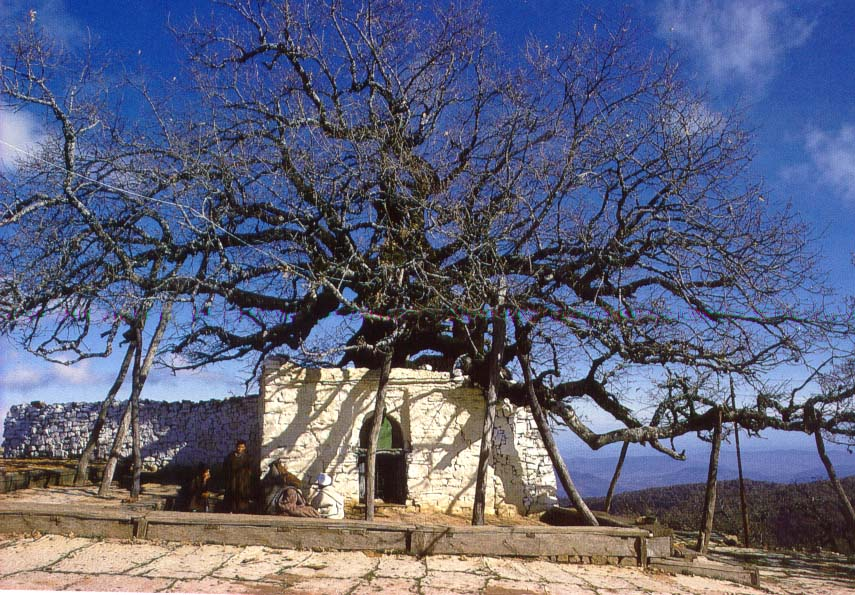
The wasiyya of Sayyidī ʿAbd al-Salām ibn Mashīsh — the Quṭb al-Gharb (Pole of the West) — reaches us through a variety of different transmissions. For the purposes of this treatise, we rely on Ibn al-Ṣabbāgh al-Judhāmī’s biographical compendium of al-Shādhulī’s life and sayings, the Durrat al-Asrār wa Tuḥfat al-Abrār, where Ibn al-Ṣabbāgh records it, on the authority of al-Shādhulī himself, as:
يا عليٌّ، اللهُ اللهُ، والناسُ الناسُ، نزِّهْ لسانَكَ عن ذكرِهم، وقلبَكَ عن التمايُلِ من قِبَلِهم، وعليكَ بحفظِ الجوارحِ وأداءِ الفرائض، وقد تمَّتْ ولايةُ الله عندك…
“O ʿAlī: Allāh, Allāh — and people, people. Purify your tongue from mentioning them, and your heart from inclining toward them. Guard your limbs and fulfill the obligations — and the friendship of God will be completed in you…”
The wasiyya continues with a supplication that Ibn Mashīsh dictated to his disciple:
اللهمَّ نجِّني من شرِّهم، وأعِني بخيرِكَ عن خيرِهم، وتولَّني بالخصوصيَّةِ من بينِهم، إنَّكَ على كلِّ شيءٍ قدير
“O God, deliver me from their evil, suffice me with Your good in place of their good, and assume exclusive care of me from among them — truly, You are mighty over all things.”
In the wasiyya, the rhetorical juxtaposition — the divine name doubled alongside the human category — creates a comparison of incomparability: each term is held to its own plane, and the very structure of the sentence warns against their confusion. And therein lies the point.
When trying to explain the meaning of this expression, many will resort to making explicit what was implicit – i.e., to insert personal pronouns into the sentence, in order to make the point more clear. It creates a new sentence, but really it is simply making explicit what was implicit: الله هو الله والناس هم الناس. Or: “Allah – He is Allah. And people, they are people.”
What does that indicate? What does that imply? Definiteness, exclusivity, and closure. It doesn’t just indicate “God is God” but rather: “God — He is precisely and only God; no-one else shares in this in the slightest; do not compare anyone or anything else in this; and be aware of the sharp distinction between Him and His Creation.”
“God is important and people are just people” — that’s the most colloquial way of explaining it. But we should see it as much deeper, as a statement of ontological discontinuity, where the divine order and the human order occupy categorically different registers of reality, and no quantity of human significance can bridge that gap.
متى أوحشَكَ من خلقِهِ فاعلَمْ أنَّهُ يريدُ أن يفتحَ لكَ بابَ الأُنْسِ به
“Whenever He estranges you from His creation, know that He wants to open for you the door of intimacy with Him.”
This hikma from Ibn Ata’illah al-Iskandari is a direct gloss on the experience of the wasiyya’s inner logic: when people disappoint, reject, or fail you, the Shādhulī reading does not counsel resentment or stoicism — it reads the experience theologically. The estrangement from creation is a divine act of pedagogy, drawing the heart toward its proper dwelling.
إنَّما أجرى الأذى على أيديهم كي لا تكونَ ساكِناً إليهم
“He ran the harm through their hands so that you would not settle with them.”
This is among the most striking hikam in its bearing on the wasiyya. God uses people — even in their hurtfulness — as instruments of spiritual re-orientation. The harm that comes through people is not attributed to God’s cruelty but to a divine refusal to let the heart find its final rest in a created source. The Quṭb’s wasiyya thus anticipates the same teaching:
الناس الناس — people are people, and their insufficiency is precisely the point.
God is unique; nothing else approaches him; and when it comes to people, don’t be too hard on them. Don’t expect too much from them. Don’t raise the bar too high for them. They’re just people. Perfection is not the line they’ll ever reach – so stop trying to make it so difficult for them to rank up. They won’t rank up. It’s not a surprise, and it’s not what you ought to be expecting.
Rather, focus on God; remember Him; orient yourself towards Him; and don’t put yourself into the position where the failings of human being have a disproportionate impact on your state. And this is what ibn Mashīsh explains next to his disciple.
⸻
The Three Dimensions of the Wasiyya
Let’s be clear: Sayyidī ʿAbd al-Salām ibn Mashīsh is here giving his final advice to Sidi Abū al-Ḥasan al-Shādhulī; a great friend of God, explicating to who would become such a tower for the world, what he needs to remember for the next stage. At this point in his life, al-Shādhulī was at the apex of his training at the hands of ibn Mashīsh, and moving on the next level of his development.
So, what the teacher tell the one who is about to end being the student?
نزِّهْ لسانَكَ عن ذكرِهم
“Purify your tongue from mentioning them.”
He begins at the first dimension, or perhaps level – the tongue. The Arabic verb نزَّهَ carries a stronger sense than “keep” or “guard”: it means to declare something holy, to exempt it from defilement, to make it inviolable (the same root appears in tasbīḥ, the glorification of God). To nazzih your tongue from the mention of people is to treat your speech as a sacred trust too noble to be spent in preoccupation with the created. Scholars delve into this to say it means the avoidance of excessive praise and blame; that it means to reduce in gossip and social preoccupation; to eliminate speech whose real function is self-positioning among others.
Then he proceeds to the second level: the heart.
وقلبَكَ عن التمايُلِ من قِبَلِهم
“And your heart from inclining toward them.”
التمايُل — inclination, leaning, a tilting of the center of gravity toward — is the key term. Classical glosses within the Shādhulī tradition interpret it as:
تعلُّق القلب بالخلق (attachment of the heart to the created)
الاعتماد عليهم (reliance upon them as sources of provision or harm)
انتظار النفع والضر منهم (expectation of benefit and harm from them, rather than from God)
This is the deeper door. The tongue’s preoccupation with people is merely the outer expression of the heart’s inner orientation toward them. So long as the heart “leans” toward people — looking to them for validation, provision, honor, or protection — the outer disciplines of the tongue and the limbs will be compromised at their root.
The Shādhulī teaching attributed to al-Shādhulī himself —
استرِحْ من تدبيرِك، فما قام به غيرُكَ عنكَ لا تقُمْ به لنفسِك (“Rest from your self-management; what another has assumed on your behalf, do not take on yourself”) — is the applied translation of this discipline: letting go of the heart’s perpetual calculation of how to secure outcomes through human means.
And then he moves onto the third dimension, which is where it all practically comes together. For anyone genuinely committed to the spiritual path should see the impacts of it upon how they engage in the world; neither should they be indefinitely separated from it, nor should the ‘impacts’ of their spiritual endeavours be absent from how they engage in the world. Otherwise, something is wrong.
وعليكَ بحفظِ الجوارحِ وأداءِ الفرائض
“And guard your limbs and fulfill the obligations.”
The wasiyya does not prescribe withdrawal from the world, ascetic isolation, or disdain for creation. Classical commentators in the tradition are unanimous on this point, and the phrase
وعليكَ — “it is upon you,” “you are responsible for” — underlines an obligation, not an option.
The phrase that has become the traditional summary of this level is:
كن معهم ببدنِكَ لا بقلبِك
“Be with them physically, not with your heart.”
You remain in society. You fulfill every duty toward people — familial, social, legal, communal. Your limbs continue to act in the human world. But the center of gravity of your heart is no longer located in the human plane. The three levels together thus describe not withdrawal from the world but a reordering of where the heart dwells while the body continues to engage.
This is true orientation towards the Real – where the person engages in the world, but ensures their heart is kept properly ordered, and thus their entire dealing with the created reflects their concern with the Creator.
————
The wasiyya of Ibn Mashīsh stands, in the history of the Shādhulī tradition, as the most condensed articulation of its spiritual program. The Ṣalāt al-Mashīshiyya is his doctrinal gift — an invocation that opens the cosmological and ontological dimensions of the Prophet ﷺ. The wasiyya is his practical gift: how to live, specifically, in the human world, from the divine orientation.
Ibn Mashīsh left one disciple. He left one composed text. He left one parting word. Everything the Shādhuliyya became flows from these three — and the parting word was this:
اللهُ اللهُ والناسُ الناس
God is God. And people are people.
⸻
